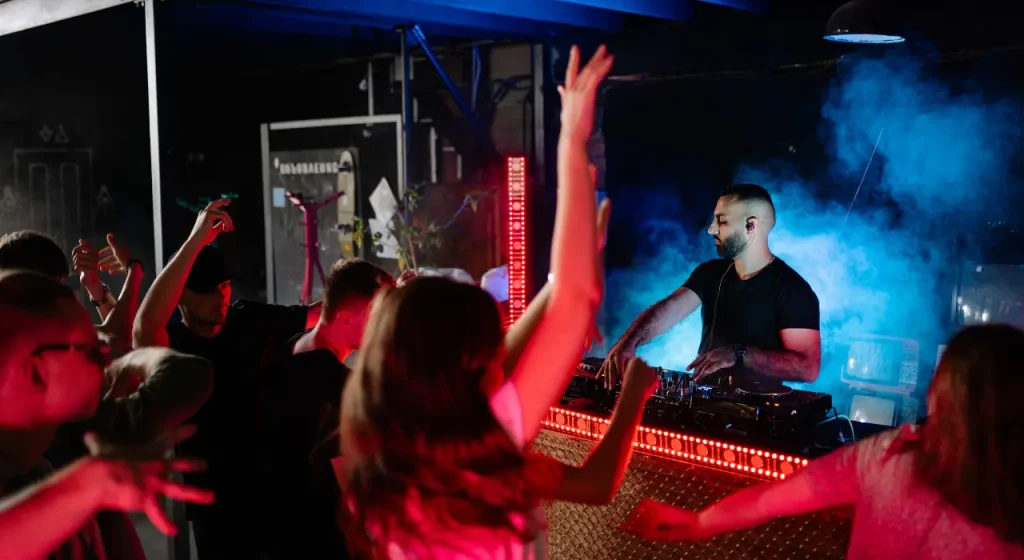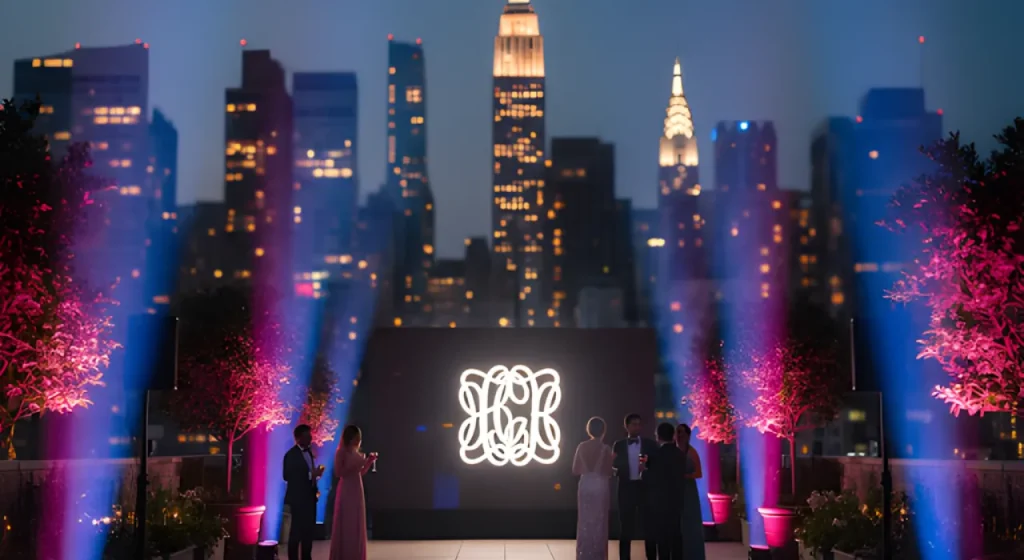
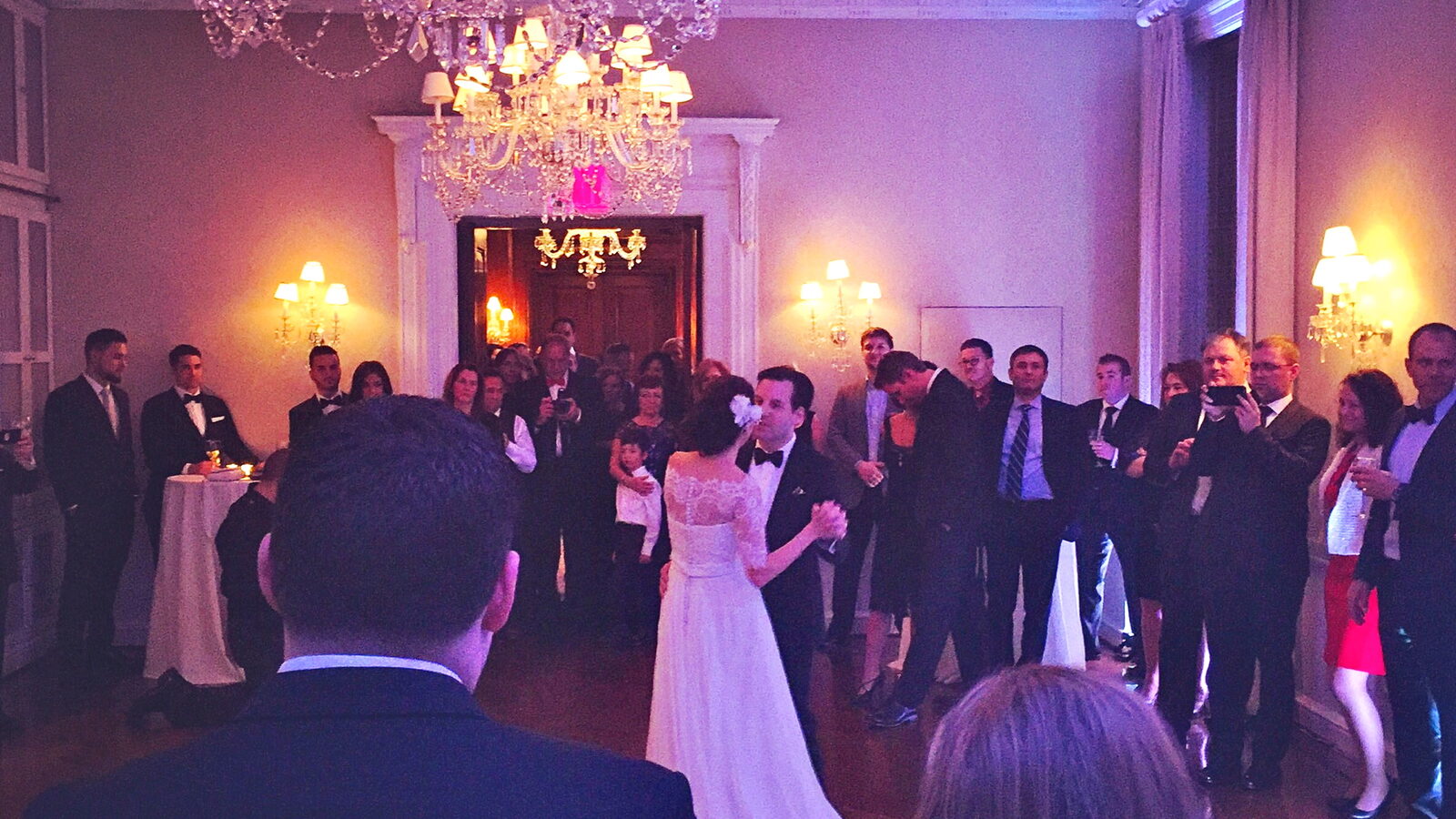
Your wedding DJ is not the person who plays music. Your wedding DJ is the person who holds the pace of the entire evening: the entrance, the first dance, the toasts, the moment the floor finally fills and stays full. Get that person right and the night feels effortless. Get it wrong and no amount of flowers, food, or photography can put the energy back. This is the complete guide to hiring a wedding DJ in New York City, from a company that has been reading New York wedding crowds since 1992. It covers what a great DJ actually does, what it costs, how to compare options, how to plan your music, and the New York specifics that catch couples out.
What a great NYC wedding DJ actually does
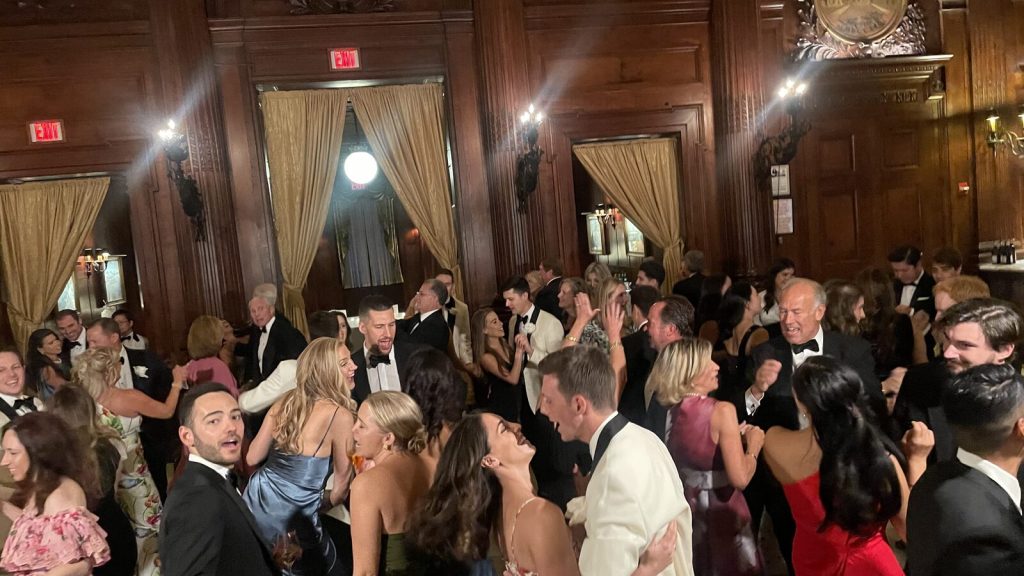
Anyone can press play. What you are paying a professional wedding DJ for is judgment in real time. A great DJ walks into a room full of strangers from three generations, with different tastes and different comfort levels, and gets all of them dancing to the same song. They know when to hold a track that is working and when to cut one that is not, in seconds, before the floor even notices. They read the room the way a good bartender reads a bar: constantly, quietly, and without ever making it obvious.
That skill only comes from having done it, over and over, for years. A DJ who has played hundreds of weddings has seen every kind of crowd and every kind of problem: the shy group that needs coaxing, the party crowd that peaks too early, the family with very specific requests, the toast that runs fifteen minutes long. They have a plan for all of it, and a backup for when the plan does not survive contact with the actual night. That is the real product, and it is why the person behind the decks matters more than the gear in front of them.
It is the MC work as much as the music
Couples underestimate this part every time. A huge amount of what makes a wedding flow is the microphone, not the music: the confident introductions, the timing of the formalities, the handoffs to your venue and your photographer, the small announcements that keep two hundred people moving in the same direction without ever feeling herded. A DJ who is a strong MC keeps the whole evening on the rails so you never have to think about it. A DJ who is weak on the microphone leaves gaps, awkward silences, and a night that stalls between moments.
When you are comparing DJs, this is one of the most important and least advertised things to ask about: who specifically will be on the microphone at your wedding, and how much MC experience do they have? A great voice and great timing on the mic is a skill in its own right, and it is a big part of what separates a wedding professional from someone who just plays music.
What a wedding DJ costs in NYC
Pricing in this industry is genuinely all over the map. Most New York couples spend somewhere between roughly $1,800 and $4,000 for a professional wedding DJ and MC, and where you land depends on experience, hours, and how much of the day you want covered. Budget DJs go lower and carry real risk; premium and heavily produced weddings go higher. The important thing to understand is that a legitimate New York price is rarely for a few hours of music in one room: it usually covers the ceremony, the cocktail hour, and the reception, plus insurance for your venue and planning meetings.
We break the numbers down in detail, including what drives the price and how to compare quotes, in our NYC wedding DJ pricing guide.
DJ or live band?
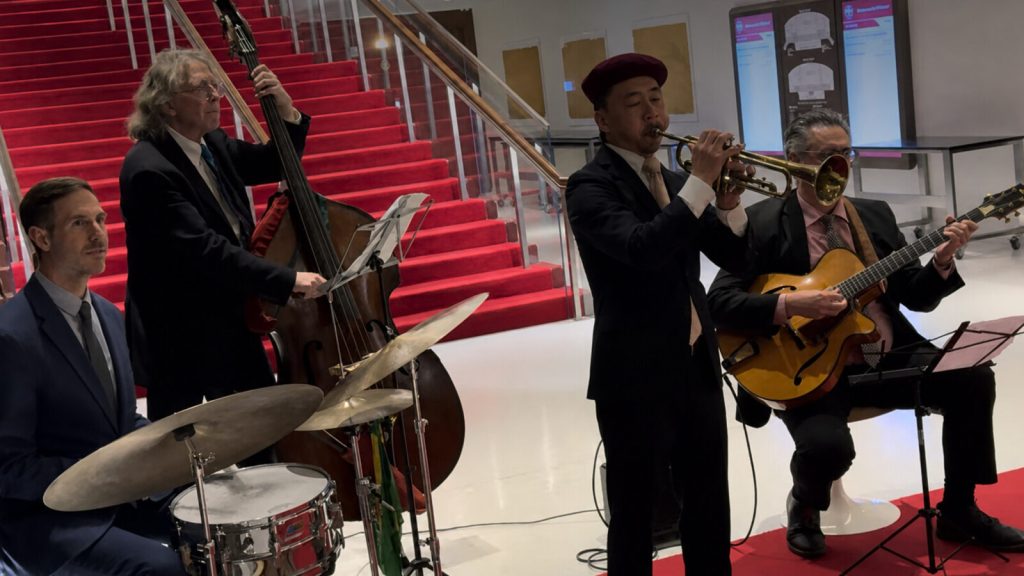
The other big decision is DJ versus live band. For most New York weddings a DJ delivers more music, more flexibility, and much lower cost, while a great band brings a spectacle that is hard to match when the budget and the room allow it. The option most couples do not realize exists is the hybrid: a DJ as the backbone of the night with a live musician or two on top, a saxophonist or percussionist over the set, or a violinist for the ceremony. You get live energy in the moments that benefit from it without the cost and rigidity of a full band. We compare all three honestly, because we do both, in our guide to wedding DJ vs live band in NYC.
What to look for when hiring a wedding DJ
Once you have a shortlist, the goal is to separate genuine professionals from people who are cheaper because they do less. A few things to look for and ask about:
- Real wedding experience. How many weddings has the DJ personally played, not the company, the actual person? Can you see or hear examples?
- Who is on the mic. Confirm exactly who will DJ and MC your wedding, and their experience. Some companies sell you one person and send another.
- What is included. Hours, ceremony and cocktail-hour coverage, sound, lighting, wireless microphones, and backup equipment. Make sure you are comparing the same thing across quotes.
- Backup gear. A professional brings backup equipment so one failure never ends the night. This is non-negotiable for a one-time event.
- A planning process. A real DJ meets with you to build the music and the timeline together, rather than showing up cold.
- Reviews that mention the night, not just the booking. Look for reviews that talk about the dance floor, the energy, and the flow.
The most common regret we hear is not that a couple spent too much on entertainment. It is that they saved a few hundred dollars on the person running the whole evening, and the energy died. A wedding happens once, in real time, with no second take.
What the planning process looks like
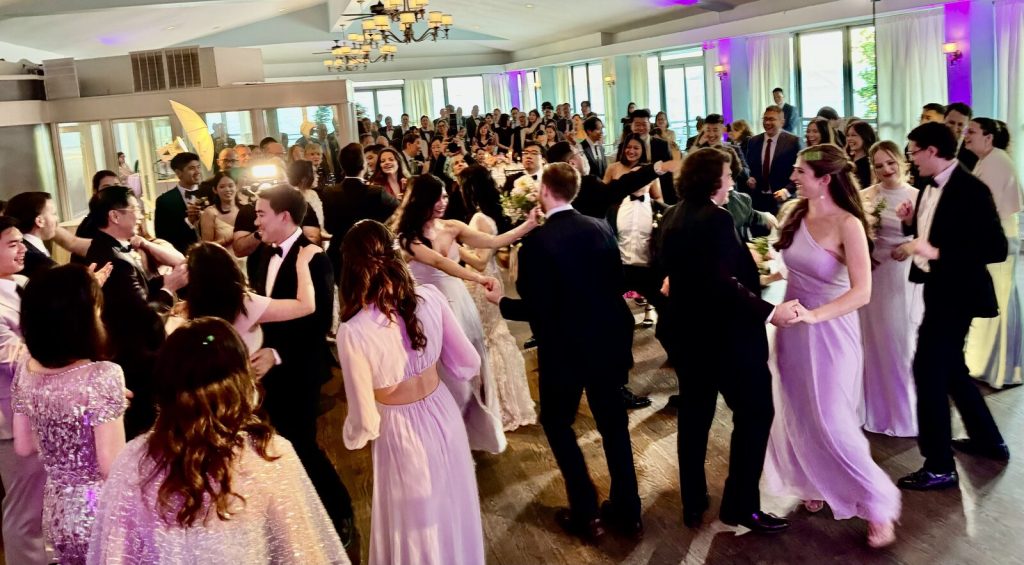
A good wedding DJ does most of their work before the day. After you book, expect one or more planning meetings where you build the night together: the must-play and do-not-play lists, the entrance and first-dance songs, the order and timing of the formalities, and any cultural or family traditions that need to be handled a certain way. A professional also coordinates with your planner, your venue, and your photographer ahead of time, so on the day everyone is working from the same run of show. By the time your wedding arrives, nothing about the music or the flow should be a surprise to your DJ. That preparation is a big part of why a full-service DJ costs what it does, and it is exactly what a bargain quote usually leaves out.
Planning your wedding music
The best weddings strike a balance between your taste and a full dance floor. A good DJ helps you find it. A few principles that hold up across almost every New York wedding:
- Give a must-play list and a do-not-play list, and keep both short. Ten songs you love and a handful you never want to hear is more useful to a DJ than a two-hundred-song playlist that boxes them in.
- Trust requests, within reason. Letting guests request keeps a floor full, and a skilled DJ filters the requests that will work from the ones that will clear the room.
- Plan for every generation. Your grandparents and your college friends are at the same party. The art is moving between eras and genres without losing either group.
- Pick the songs that matter, and let the DJ handle the rest. Your first dance, parent dances, and entrance songs are personal. The other four hours are where you want a professional reading the room, not a fixed playlist on autopilot.
Your first dance and the moments that matter
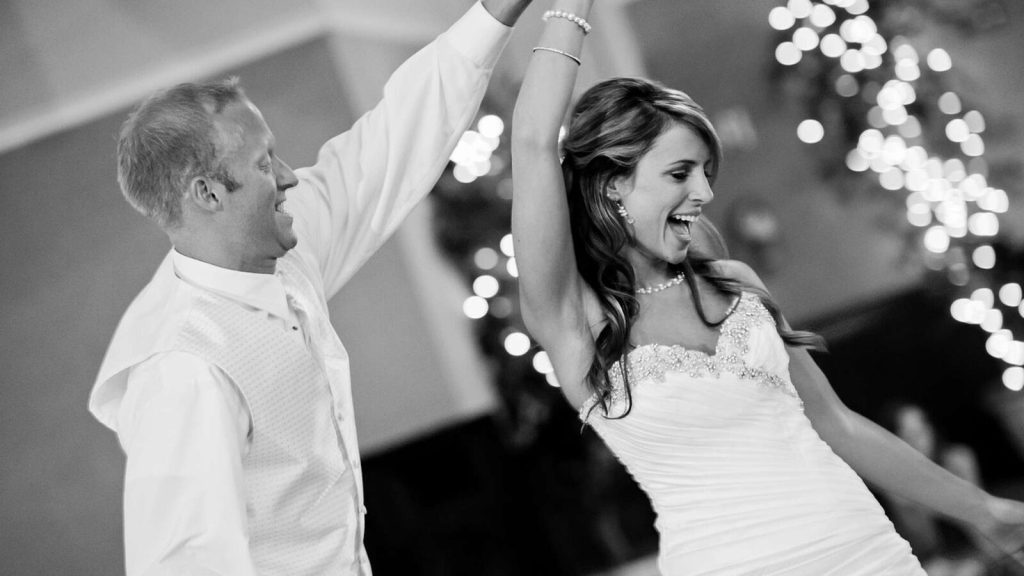
A handful of songs at your wedding are deeply personal, and they deserve real thought: your first dance, the parent dances, and your grand entrance. These are the moments people remember and photograph, so it is worth choosing them early and telling your DJ exactly how you want each one handled, including whether you want a full song or a shortened edit that keeps the energy tight. A good DJ will also help you place them well in the night, so they land when the room is with you rather than competing with dinner service or a mid-evening lull. There is a real craft to the transitions around these moments too: coming out of a slow first dance into something that lifts the floor, or moving from the parent dances straight into open dancing so the family stays up and the party starts itself. Everything around those key songs is where you should trust your DJ to read the floor. The art of a great wedding is protecting the handful of songs that mean something to you, while giving the professional the freedom to make every other choice in the moment, based on what the room is actually doing.
Lighting and the look of your reception
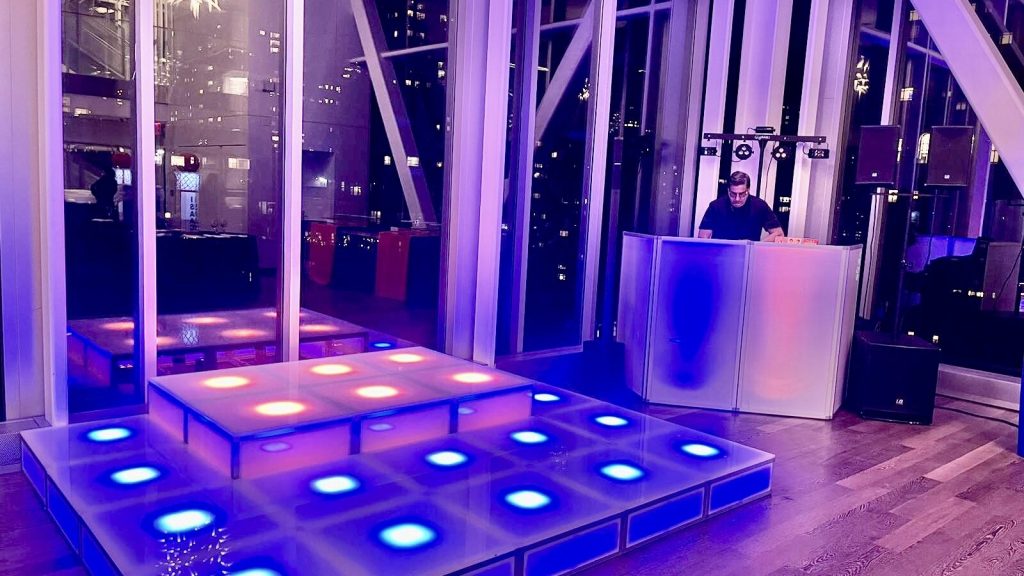
Music sets the energy, but lighting sets the mood, and the two work together more than couples expect. Dance-floor lighting gives the room a sense of occasion once the dancing starts, and it is what makes photos of a full floor look alive rather than flat. Uplighting, placed around the perimeter of the room, can transform a plain space into something that feels designed, and it can be set to your colors. In a New York venue where the room itself is neutral, lighting is often the single biggest thing that makes it feel like your wedding. A full-service DJ can handle the lighting alongside the sound, which is usually simpler and cheaper than bringing in a separate vendor, and it means one team is responsible for both the energy and the look.
Sound and setup: what you are actually getting
The equipment matters less than the person using it, but it still has to be right, and it is another place cheap quotes cut corners. A professional wedding setup means sound scaled to your specific room, so the music fills the space without blasting the guests nearest the speakers, wireless microphones for the ceremony, the toasts, and the announcements, and backup equipment on site so a single technical failure never brings the night to a halt. In a large or multi-room New York venue, doing this properly can mean more than one system, one for the ceremony space and another for the reception. None of this should be something you have to think about on the day. A real DJ arrives with the right gear for your room, sets it discreetly so it never dominates your photos, and has a plan for when something goes wrong, because at a wedding there is no rehearsal and no chance to fix a problem twice. When you compare quotes, a setup that looks cheaper often just includes less of this, which is exactly the part you cannot see until it is missing.
Ceremony, cocktail hour, and reception
A New York wedding is rarely one room and one playlist, and understanding that is the key to understanding both the price and the plan. A full-service wedding DJ typically covers three distinct parts of the day, often in three different spaces:
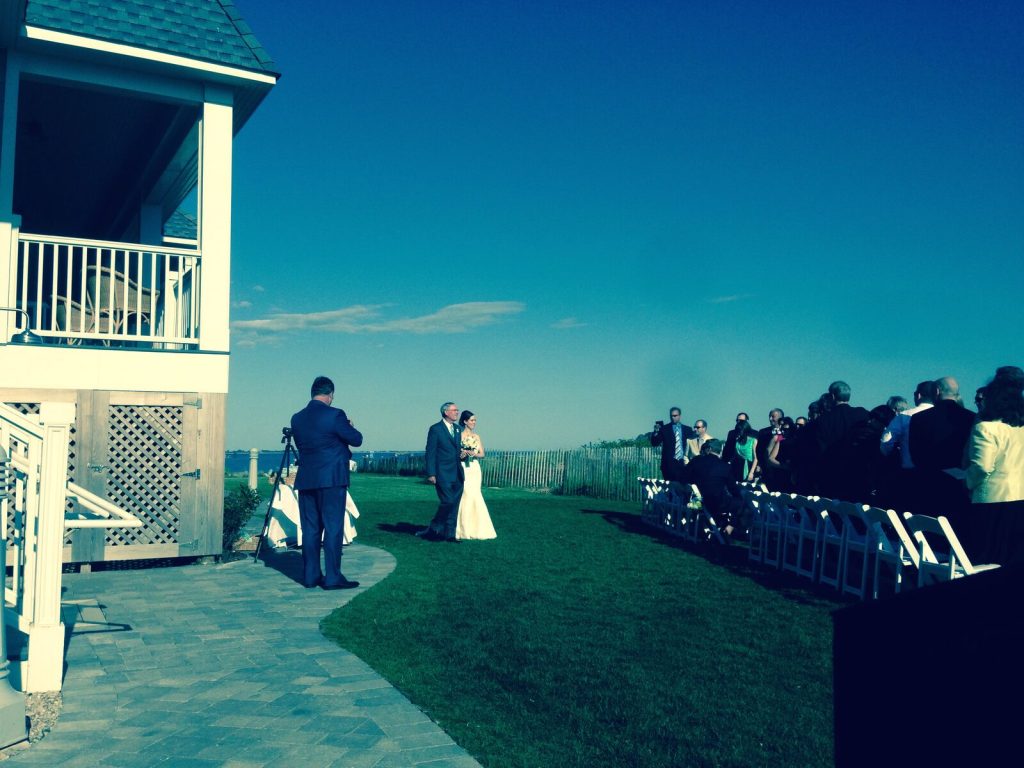
- The ceremony, frequently in a separate area, which needs its own DJ setup and wireless microphones for the officiant, the vows, and the readings, plus carefully chosen processional and recessional music.
- The cocktail hour, often in a separate room, with its own sound and a curated set that keeps the energy warm without pushing it too soon.
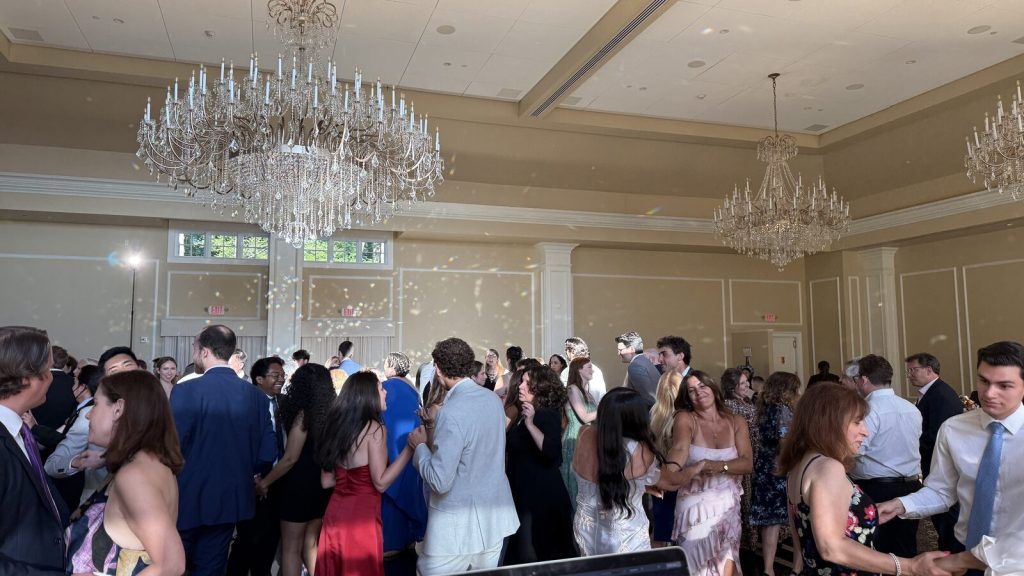
- The reception, the main event, DJed and MCed in the main room, where the entrance, the first dance, the toasts, and the open dancing all happen.
Each of those parts has a different job and a different energy, and a professional plans the music and the transitions for all three so the day builds naturally instead of lurching between moments.
The reception timeline
The reception itself runs on a timeline that most couples never see but always feel. The order and timing of the entrance, first dance, toasts, dinner, parent dances, and open dancing is what makes a night flow or stall. A good DJ and MC build that timeline with you and then run it on the night, coordinating with your venue and photographer so you never have to. We lay out a full hour-by-hour plan, including a sample five-hour timeline, in our guide to the wedding reception timeline.
New York specifics to plan around
New York adds a few wrinkles that couples in other markets do not always face, and a DJ who works the city knows all of them:
- Venue curfews. Many NYC venues have a hard end time, sometimes as early as 11pm, with overtime charged by the hour. The timeline should be built backward from your curfew.
- Sound limits. Some Manhattan venues have strict decibel limits. A DJ who knows the room plans the setup around them so the party never gets cut short.
- Tight rooms and load-ins. New York spaces are often compact, with narrow load-in windows. A compact, flexible DJ setup fits where a full band cannot.
- Multi-room flow. When the ceremony, cocktail hour, and reception are in separate spaces, the transitions and the separate setups all have to be planned in advance.
Your venue shapes all of this, which is why it helps to hire a DJ who has worked it before. We know a lot of the city’s rooms, from Manhattan landmarks to Brooklyn lofts and skyline rooftops. See some of them on our list of the top NYC wedding venues we DJ at, and read how the space itself changes the sound in our guide to matching your wedding music to your venue.
Common wedding DJ mistakes to avoid
Most wedding-music problems are avoidable, and they come up again and again. The ones worth planning around:
- Booking on price alone. The cheapest DJ is almost always the biggest risk on the most irreplaceable day. Judge value, not just the number.
- Front-loading the speeches. Too many toasts before dinner kill the momentum before the party even starts. Keep them tight and place the long ones between dinner courses.
- Over-planning the playlist. Handing a DJ a rigid two-hundred-song list removes the one thing you are paying for, which is their judgment in the moment.
- Ignoring the room. A DJ who has never seen your venue can be caught out by its sound limits, load-in, or layout. Ask what they know about your space.
- Skipping the MC question. Assuming any DJ can run the microphone is how weddings end up with awkward gaps and a night that stalls.
- Leaving no buffer in the timeline. One slow dinner course should not derail the whole evening. A good plan has room to flex.
Why experience is the whole product
Everything above comes back to one thing: experience. The quote you pay buys equipment and hours, but what actually makes the night is knowing, in the moment, when to hold a song and when to change it, how to read a New York crowd, how to keep three generations on the floor at once, and how to recover when something runs long. None of that can be bought as a feature. It only comes from having done it, at real weddings, for years.
Expressway Music has been reading New York wedding crowds since 1992. Our founder, David Swirsky, is a singer-songwriter who has led the company for over three decades, and that background shows up in how we treat music and a room. Weddings are not a side line for us; they are the thing we have spent thirty years getting right.
How to book your NYC wedding DJ
When you are ready, the process is simple: tell us your date, your venue, and what you have in mind, and we will put together a straight, honest quote with no pressure. Dates book up fast in peak season, so it is worth reaching out early even if your plans are not final. You can see everything we offer on our wedding DJ services page.
Frequently asked questions
What does a wedding DJ actually do beyond playing music?
A wedding DJ runs the pace of the whole evening. Beyond the music, they act as your MC, handling introductions, the timing of the formalities, and coordination with your venue and photographer, and they read the room in real time to keep every generation on the dance floor.
How much does a wedding DJ cost in NYC?
Most New York couples spend between roughly $1,800 and $4,000 for a professional wedding DJ and MC, depending on experience, hours, and how much of the day is covered. See our NYC wedding DJ pricing guide for a full breakdown.
How far in advance should I book a wedding DJ?
As early as you can, especially for peak Saturdays from late spring through fall. Good DJs book up months ahead, so it is worth reaching out even before your other plans are final.
Should I hire a DJ or a live band?
For most New York weddings a DJ offers more range, flexibility, and value, while a live band brings spectacle when the budget and space allow. Many couples get the best of both with a DJ plus a live musician or two.
What questions should I ask a wedding DJ before booking?
Ask how many weddings the specific DJ has played, who will be on the microphone, exactly what is included, whether they bring backup equipment, and whether you get a planning meeting to build the music and timeline together.
Talk to a New York wedding DJ who has done it since 1992
The best way to know if we are right for your wedding is a straight conversation about your date, your venue, and your vision. No pressure, just honest advice from a team that has run New York weddings for over thirty years. Check your date with Expressway Music