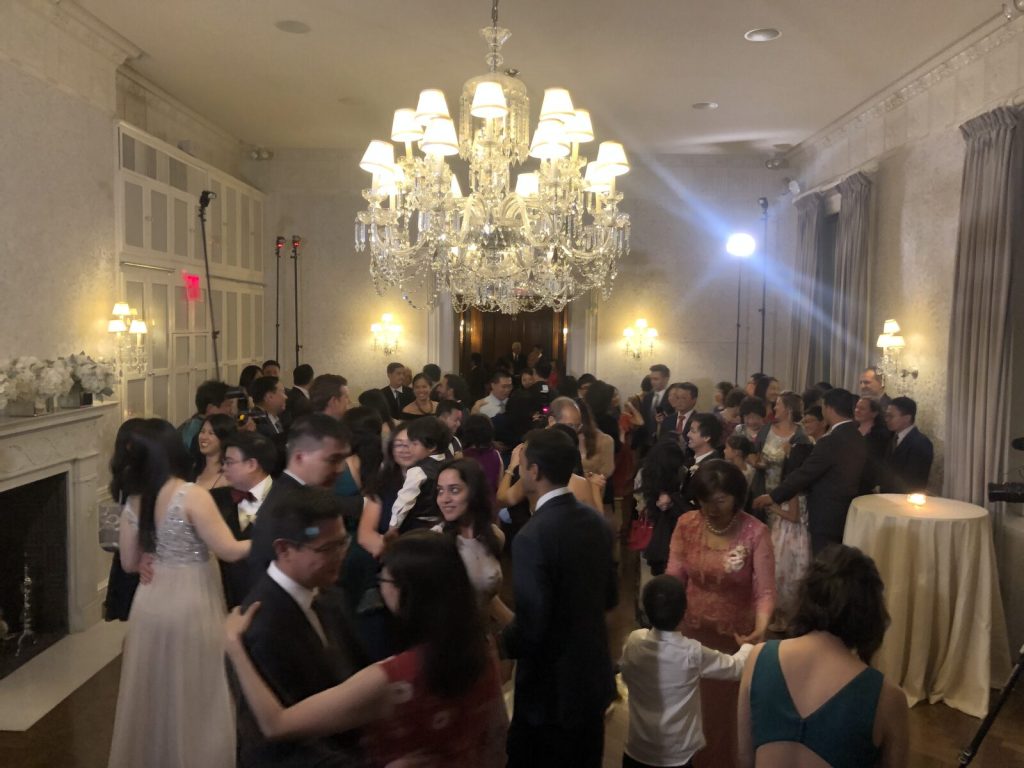
The wedding reception timeline is the invisible thing that makes a great night feel effortless. When it works, guests never notice it: dinner arrives on time, the toasts land, the floor fills and stays full. When it falls apart, everyone feels it. As the DJ and MC, we are the ones holding that pace in real time, and after running New York weddings since 1992, we have seen exactly which timelines flow and which stall. Here is a complete hour-by-hour guide, plus a sample timeline you can adapt to your own wedding.
Who actually runs the reception timeline
On the day, the reception runs on a handoff between your DJ and MC, your venue or catering captain, and your photographer. The MC calls the moments and keeps the room moving; the captain paces the food; the photographer needs a heads-up before anything visual. A good DJ and MC quietly coordinate all three so the couple never has to think about it. That coordination is the difference between a timeline on paper and a night that actually flows.
A sample NYC wedding reception timeline
Most New York receptions run four to five hours. Here is a realistic five-hour timeline, from a 6:00 pm start, that leaves plenty of dancing while still fitting the formalities in:
| Time | Moment |
|---|---|
| 6:00 | Doors open, guests find seats, grand entrance of the wedding party and couple |
| 6:10 | First dance (straight off the entrance, while all eyes are already on you) |
| 6:15 | Welcome toast and any blessing |
| 6:20 | First course served |
| 6:45 | Toasts: best man and maid of honor, between courses |
| 7:10 | Parent dances (father-daughter, mother-son) |
| 7:20 | Dance floor opens, first dance set |
| 8:15 | Cake cutting, then straight back to the floor |
| 8:25 | Main party set |
| 10:30 | Optional bouquet toss |
| 10:50 | Last dance |
| 11:00 | Grand send-off, reception ends |
This is a template, not a rule. Cultural traditions, a longer dinner, or a live band set will all shift it, and a good DJ builds the version that fits your wedding.
The key moments, and when to place them
Grand entrance
Set the tone here. A high-energy song and a confident MC introduction tells the room the party has started. Keep the wedding party entrance quick so the couple is the payoff.
First dance
We usually recommend doing the first dance right after the entrance, while everyone is already standing and focused, rather than pulling attention back later. It also gets the most nerve-wracking moment out of the way early.
Welcome and toasts
A short welcome from a host or parent works well before dinner. Save the best man and maid of honor toasts for between dinner courses, so they have a captive, seated audience and do not cut into dancing time. Keep the total number of speeches tight; three to four strong toasts beat seven rambling ones.
Dinner
Dinner is your buffer. This is where a DJ reads the room and plays lower-energy music that lets people talk, while quietly watching the kitchen so the formalities slot between courses.
Parent dances
Placed right at the end of dinner, the parent dances act as the bridge onto the dance floor: they pull the family up first, and the room follows.
Open dancing
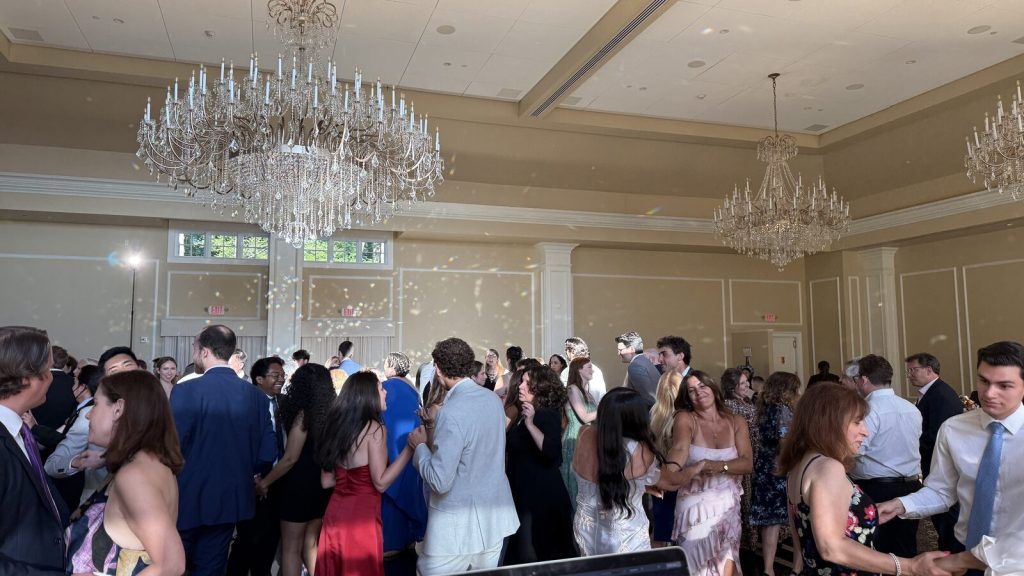
The heart of the night. A strong DJ opens with something that guarantees a full floor, then reads the crowd rather than running a fixed playlist, keeping every generation moving.
Cake cutting
Slot the cake cutting into a natural lull about an hour into dancing. Do it quickly and get straight back to the floor, so the energy never drops.
Last dance and send-off
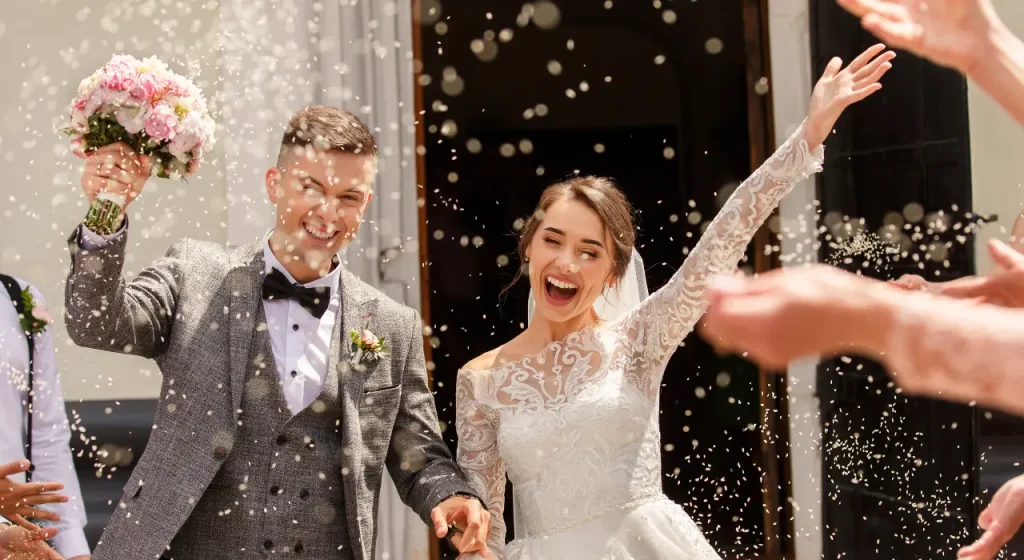
End on a high with a song that means something to you, then a planned send-off. A clean, energetic finish is what guests remember on the way home.
How long each part really takes
- Grand entrance and first dance: 10 to 15 minutes
- Welcome and blessing: 5 minutes
- Dinner service: 60 to 90 minutes, depending on courses and plated versus buffet
- Toasts: 3 to 5 minutes each, ideally 15 minutes total
- Parent dances: 5 to 10 minutes
- Cake cutting: 5 minutes
- Open dancing: as much as you can protect, usually 2 to 2.5 hours across the night
New York specifics worth planning around
- Venue curfews. Many NYC venues have a hard end time, sometimes as early as 11:00 pm, with overtime charged by the hour. Build the timeline backward from your curfew, not forward from your start.
- Multi-room flow. If your ceremony, cocktail hour, and reception are in separate spaces, factor in the transitions and the DJ setup each room needs.
- Vendor meals. Your DJ, photographer, and planner usually eat during your dinner. Coordinate it so no key vendor is away from the floor during a formality.
- Load-in and sound limits. Some Manhattan venues have strict load-in windows and decibel limits. A DJ who knows the room plans around both.
Common timeline mistakes
- Front-loading too many speeches before dinner, which kills momentum before it starts.
- Scheduling the first dance an hour in, after the room has cooled off.
- Leaving no buffer, so one slow dinner course pushes the whole night off the rails.
- Cutting open dancing to fit in optional extras. When time is tight, protect the dance floor first.
Building your timeline with your DJ
The best timeline is built with the person who will run it. In our planning meetings we map your reception minute by minute with you, coordinate it with your venue and photographer, and then adapt on the night as the room dictates. If you want to see how the music and the flow come together, that is the core of what we do on our wedding DJ services page. And if you are still weighing options and budget, our NYC wedding DJ pricing guide breaks down what a full-service DJ actually covers, while our complete guide to hiring a NYC wedding DJ ties the whole planning process together.
Frequently asked questions
How long is a typical wedding reception?
Most receptions run four to five hours, covering the grand entrance, dinner, toasts, and open dancing. In New York, the venue curfew often sets the hard end time.
What is the order of events at a wedding reception?
A common order is: grand entrance, first dance, welcome toast, dinner (with best man and maid of honor toasts between courses), parent dances, open dancing, cake cutting, and a last dance or send-off.
When should the first dance happen?
We usually recommend right after the grand entrance, while the room is already standing and focused. It sets the tone and gets the biggest moment out of the way early.
Should toasts be before or during dinner?
Keep a short welcome before dinner, and place the longer best man and maid of honor toasts between dinner courses. That gives them a seated audience without eating into dancing time.
Let’s build your reception timeline
A timeline that flows is one of the biggest things a great DJ and MC bring to your wedding. Tell us about your day and we will help you map it out. Check your date with Expressway Music.