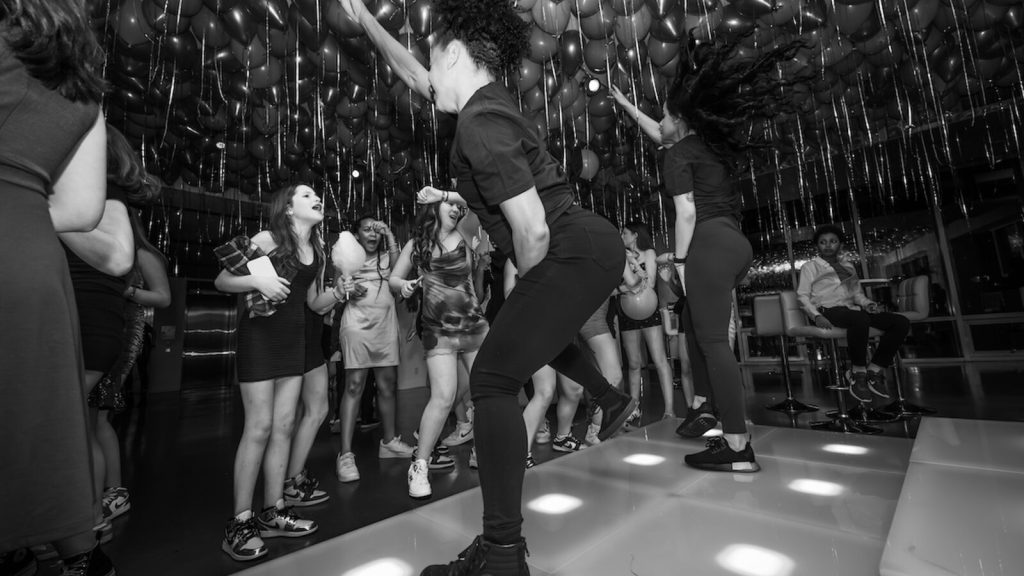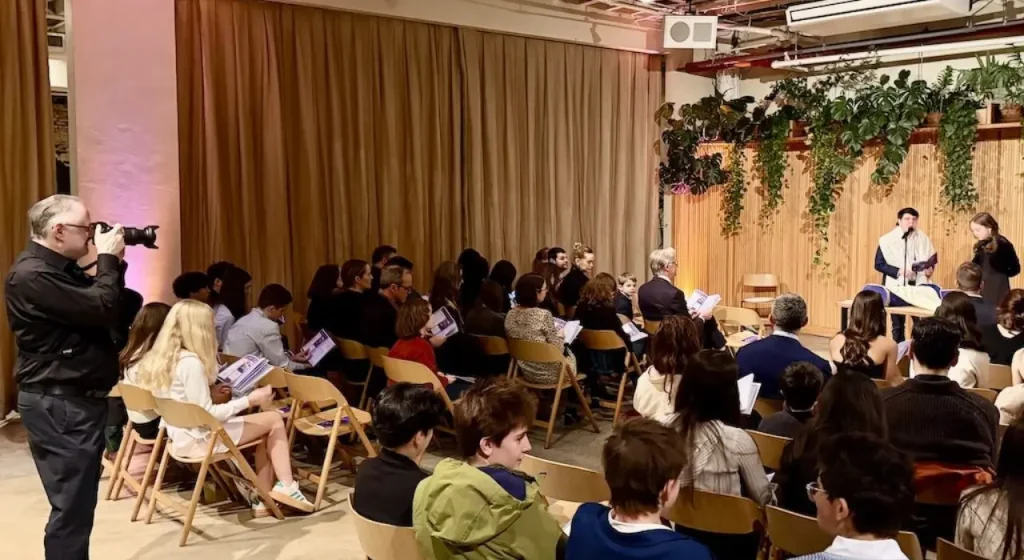
The horah is a Jewish circle dance: guests join hands and dance around the room to songs like Hava Nagila, then lift the bar or bat mitzvah child up on a chair. The Horah is the undisputed “heartbeat” of a Bar or Bat Mitzvah celebration. It’s more than just a dance; it is a high-energy, communal ritual that bridges the gap between the formal ceremony and the high energy party.
Here are the three most popular Horahs with both vocals and instrumentals, along with why the timing of this dance is so crucial.
1. Top 3 Horah Songs (Vocals & Instrumentals)
While many bands play a “Horah Medley,” these three tracks are the core staples that every guest Jewish or not—will recognize and sing along to.
| Song Title | Meaning / Vibe | Why It’s Popular |
| Hava Nagila | “Let us rejoice” | The king of all Jewish celebration songs. It starts slow and builds into a frenetic, high speed tempo that is perfect for the “chair lift.” |
| Siman Tov U’Mazel Tov | “A good sign and good luck” | Often used as the transition song. It has a repetitive, catchy vocal hook that makes it easy for the whole room to sing in unison. |
| Hevenu Shalom Aleichem | “We brought peace to you” | A joyful, welcoming anthem. It’s often used to bring people into the circle who might be hesitant, as the rhythm is steady and inviting. |
2. The Importance of a Good Horah
A well-executed Horah serves three major purposes for the event:
- Symbol of Unity: The circular formation represents the community supporting the child. Everyone, from toddlers to great-grandparents, joins hands to form a single, unbroken ring.
- The “Elevation” Ritual: Lifting the Bar/Bat Mitzvah child on a chair is the ultimate sign of respect. Symbolically, you are lifting them closer to heaven and celebrating their transition into adulthood.
- Energy Management: It is the primary “icebreaker.” A great Horah removes any social awkwardness and ensures the dance floor stays packed for the rest of the night.
When to Play the Horah
Timing is everything. If you play it too early, people haven’t loosened up; if you play it too late, the older guests might have already left.
Option A: The Grand Entrance (High Energy)
Many families choose to go straight into the Horah immediately after the Mitzvah child’s Grand Entrance. This sets an explosive tone for the night and ensures that everyone is on the dance floor before dinner is even served.
Option B: The Post-Dinner Kickoff (Traditional)
The most common timing is immediately after the main course. Once guests have finished eating, the DJ or band uses the Horah to “re-open” the dance floor. It serves as the bridge between the formal dinner and the “club” or “party” portion of the evening.
Pro-Tip: Keep the Horah to roughly 8–12 minutes. Anything shorter feels rushed, but anything longer can exhaust your guests before the party really begins!
Frequently asked questions
What is the horah?
The horah is a Jewish circle dance. Guests join hands and dance around the room, usually to Hava Nagila, and the high point is lifting the bar or bat mitzvah child up on a chair. We have led it at bar and bat mitzvahs across New York since 1992.
What song do you do the horah to?
Hava Nagila is the classic. Most horahs run as a medley: Hava Nagila, then Siman Tov U’Mazel Tov and Hevenu Shalom Aleichem, with the tempo building toward the chair lift.
Is it horah or hora?
Both are correct. They are two English spellings of the same Hebrew word, and you will see both on invitations and playlists.
Is the hora the same as Hava Nagila?
No. The hora is the dance and Hava Nagila is the song most often played for it. You can dance the hora to other songs, and Hava Nagila is sung at plenty of celebrations without one.
What is the chair dance called?
It is the chair lift, and it happens during the horah. A few guests raise the bar or bat mitzvah child on a chair, and often the parents after them. A good MC calls the lifters onto the floor by name and keeps each lift short and steady.